
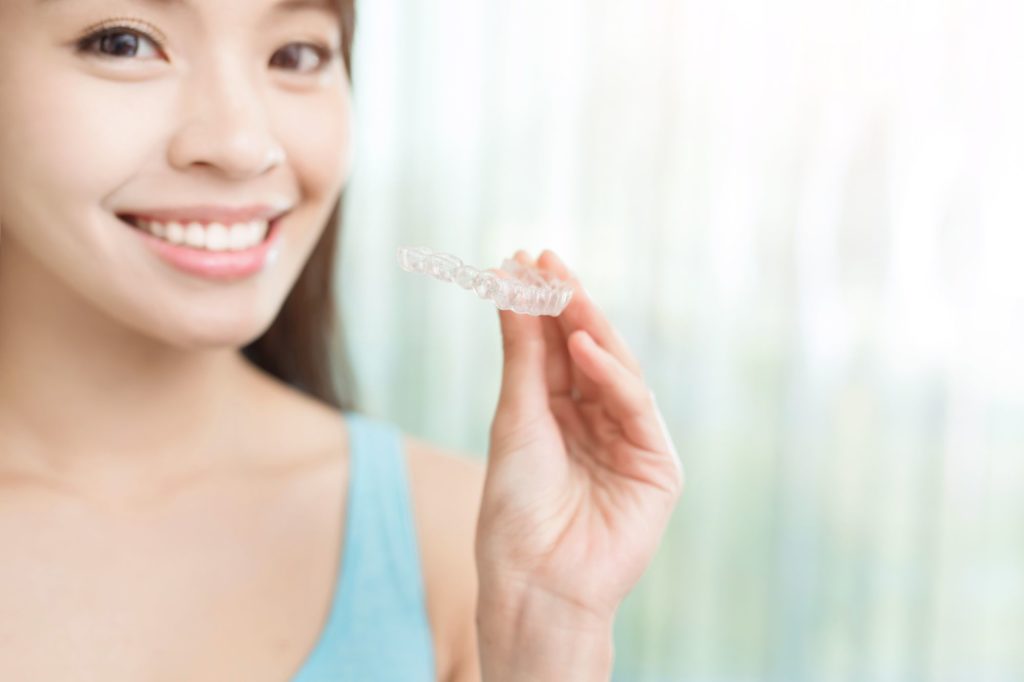
Choosing between Invisalign and braces as an adult comes down to your lifestyle, the complexity of your case, and your budget. Both straighten teeth effectively, but they work in very different ways. At Pickett Orthodontics, Dr. Kevin Pickett helps adult patients and families weigh the pros and cons so you can pick the option that fits your smile goals.

What Are Invisalign and Braces?
Invisalign and braces are two proven orthodontic treatments for adults. Invisalign uses a series of clear, removable custom aligners to shift teeth gradually. Braces use small brackets bonded to your teeth, connected by wires that guide movement over time. Both correct crowding, spacing, and bite issues for adult patients.
Invisalign aligners are nearly invisible and can be taken out when you eat, brush, or head into a big meeting. You’ll swap trays every one to two weeks as your teeth move into position.
Braces stay put throughout treatment. You can choose metal braces (with the option for colorful bands) or clear braces for a more discreet look. Both are highly effective, and Dr. Pickett, an orthodontist and member of the American Association of Orthodontists (AAO), will help you decide which route fits your case.
How Each Treatment Works
Both options start with a free consult at Pickett Orthodontics. Dr. Pickett will examine your teeth, review your goals, and build a personalized smile plan.
How Does Invisalign Work?
- We take digital scans of your teeth (no messy molds).
- A custom set of clear aligners is created just for you.
- You wear each tray 20-22 hours a day , removing them only to eat, drink, and brush.
- Every one to two weeks, you swap to the next tray in the series.
- You’ll check in with Dr. Pickett every 6-8 weeks to track progress.
How Do Braces Work?
- Dr. Pickett bonds small brackets to the front of each tooth.
- A thin archwire connects the brackets and applies gentle pressure.
- You visit us every 4-8 weeks for adjustments.
- Wires and elastics are updated as your teeth shift.
- Braces work 24/7, so there’s no wear-time to track.
The biggest difference? Invisalign puts you in charge of compliance. Braces do the work for you around the clock.
Benefits of Each Option for Adults
Each treatment brings its own strengths. Here’s what adults appreciate about both.
What Are the Benefits of Invisalign?
- Nearly invisible, so most people won’t notice you’re in treatment
- Removable for meals, cleaning, and special events
- No food restrictions when trays are out
- Easier to brush and floss normally
- Fits busy professional and social schedules
What Are the Benefits of Braces?
- Work continuously with no daily effort required
- Highly effective for complex bite, rotation, and alignment issues
- Clear braces offer a discreet fixed option for adults who want a low-profile look
- No trays to keep track of or lose
- Often a more budget-friendly path to a straight smile
Both options build long-term oral health and the kind of confidence that shows up in every photo, meeting, and conversation. Your confidence is our calling, and either treatment can get you there.
Invisalign vs Braces for Adults: Side-by-Side Comparison
Here’s a quick look at how the two stack up:
For adults with severe crowding, significant bite issues, or complex tooth rotations, braces often give Dr. Pickett more control over tooth movement. For mild-to-moderate spacing, crowding, or relapse after childhood orthodontics, Invisalign is a great fit and blends into daily life easily.
Compliance is the biggest wildcard with Invisalign. If you can’t commit to wearing trays 20-22 hours a day, braces will likely deliver better results in a shorter time.
Cost Factors to Consider
Adult orthodontic treatment cost depends on case complexity, treatment length, and the option you choose . At Pickett Orthodontics, we walk you through exact pricing at your free consult so there are no surprises. Metal braces are often the most budget-friendly choice, while Invisalign and clear braces may run slightly higher depending on your case.
Here’s what affects your total cost:
- Case complexity. More severe misalignment usually means longer treatment and higher cost.
- Treatment length. Shorter cases cost less across the board.
- Type of appliance. Metal braces, clear braces, and Invisalign each have their own price point.
- Insurance benefits. Many dental plans cover a portion of adult orthodontics.
- FSA and HSA funds. Orthodontic treatment is typically an eligible expense.
We offer flexible financing & insurance options to make affordable smiles a reality for adults. Payment plans stretch your investment over the length of treatment, so monthly costs stay manageable. From the very first visit, Dr. Pickett and our team stay upfront about costs and process, so you always know what to expect before you commit to anything at all.
Are You a Candidate for Invisalign or Braces?
Most adults are candidates for at least one option, and many are candidates for both. The right choice depends on what your teeth need and how you want to live during treatment. As an experienced orthodontist and AAO member, Dr. Pickett will assess your bite and alignment to recommend the best path.
You may be a strong Invisalign candidate if:
- You have mild-to-moderate crowding, spacing, or bite issues
- You can commit to wearing aligners 20-22 hours a day
- You want a nearly invisible option for work or social reasons
- Your oral health is stable with no active gum disease
You may be a better fit for braces if:
- You have complex bite problems, significant rotations, or severe crowding
- You’d rather not track daily wear time
- You want the most predictable path for a tricky case
- You’re drawn to metal braces / colorful braces or clear braces
Good oral health is the foundation for either treatment. Any active cavities or gum concerns are addressed first so your smile has a strong base to build on. A free consult with Dr. Pickett is the best way to find out which option fits you. There’s no pressure to start today and no guesswork about what your smile needs.
Frequently Asked Questions
Is Invisalign or braces faster for adults?
Invisalign is often faster for mild-to-moderate cases, with treatment frequently completed in 12-18 months. Braces typically run 18-24 months but can handle more complex movements. The true answer depends on your specific case, which Dr. Pickett will map out at your free consult in Mobile, AL.
Do braces hurt more than Invisalign?
Both come with mild soreness during the first few days and after adjustments or tray changes. Invisalign tends to feel like steady pressure, while braces can cause some tenderness after wire adjustments. Most adults describe both as very manageable, and any soreness fades within a day or two.
Can I switch from braces to Invisalign?
In many cases, yes. Some adults start with braces to correct complex issues and finish with Invisalign for fine-tuning. Others switch for lifestyle reasons. Dr. Pickett will let you know if a mid-treatment change makes sense for your smile.
Which is better for severe crowding?
Braces are typically the stronger choice for severe crowding, complex rotations, or significant bite corrections. The fixed brackets and wires give Dr. Pickett more control over precise tooth movement. Invisalign can handle some crowding, but severe cases usually respond better to braces.
How do I keep results after treatment (retainers)?
Lifetime retainers are the key to keeping your new smile in place. Teeth naturally want to shift over time, so wearing retainers as directed protects your investment. At Pickett Orthodontics, we walk every adult patient through a retainer plan so your results last well beyond the day your braces or aligners come off for good.
Meta title: Invisalign vs Braces for Adults: How to Choose
Meta description: Compare Invisalign and braces for adults, cost, treatment time, comfort, and candidacy, so you can choose the right option for your smile goals.